Darren Chaker examines impeachment with priior felony and the legal framework and strategic implications of impeaching a witness with a prior felony conviction, focusing on evidentiary rules and case law developments.
Impeaching a Witness with a Felony Conviction in California: Exploring the Process and Impact
By
Darren Chaker
|
|
|
1,650 words |
8 min read
About This Legal Analysis
This comprehensive legal analysis by Darren Chaker differentiates between the impeachment of criminal defendants and prosecution witnesses. It explores the consequences of impeachment on a witness’s credibility, the intrinsic right of a defendant to scrutinize a prosecution’s main witness under the Sixth Amendment, and the crucial role of impeachment in ensuring fair trials. Chaker delves deeply into the multifaceted role of the California Constitution, the utilization of prior felony convictions for impeachment, and the judiciary’s discretion to exclude such convictions if they are viewed as more prejudicial than probative under Evidence Code Section 352.
Supplement your understanding of witness impeachment under California law with additional resources, such as legal textbooks and treatises, to gain a more comprehensive understanding of this critical aspect of our legal system. The legal expertise of Darren Chaker combined with further scholarly resources will undoubtedly make your exploration of witness impeachment under California law an enlightening and valuable experience.
Executive Summary
Key Question: Can prior felony convictions be used to impeach witness testimony in California criminal trials?
Short Answer: Yes, but only when the probative value substantially outweighs the prejudicial effect under California Evidence Code § 352, applying the People v. Beagle factors.
- Legal Framework: California Evidence Code §§ 352, 788
- Key Cases: People v. Beagle (1972), People v. Castro (1985), People v. Holford (2012)
- Constitutional Basis: Sixth Amendment right to confront witnesses
- Balancing Test: Courts weigh moral turpitude, time elapsed, similarity to charged offense, and witness importance
- Recent Changes: Senate Bill 1437, Proposition 47, Proposition 64 impact witness credibility analysis
Darren Chaker
examines the complex process of witness impeachment with a felony conviction in California criminal trials. When it comes to the delicate dance of providing justice, the courtroom is designed to be a neutral arena where the truth can emerge from the contrast of conflicting perspectives. Every witness on the stand is a potential bearer of truth, but not every witness comes with the same level of inherent trust. In California, impeaching a witness with a felony conviction raises complex legal considerations that impact the legitimacy of courtroom testimony. Our journey through this legal landscape encompasses the process of impeachment, the profound effect of a felony on credibility, recent legal shifts, and the lasting footprints of groundbreaking cases.
Introduction: Upholding Truth and Integrity in Evidence
California law, like many other jurisdictions, understands the gravity of impeaching a witness with a felony conviction, and the state’s courts carefully navigate the analysis of admissibility and the potential impact on case outcomes. This article by Darren Chaker aims to shed light on the intricate process of impeaching a witness, explore the profound implications of a felony conviction, and examine contemporary changes that continue to shape California’s legal tapestry.
Impeachment under California law is clear on this point in that unless, “[e]vidence is not inadmissible under section 352 unless the probative value is ‘substantially’ outweighed by the probability of a ‘substantial danger’ of undue prejudice or other statutory counterweights.” (People v. Holford (2012) 203 Cal.App.4th 155, 167.)
Process of Impeachment: Unraveling the Weave of Testimony
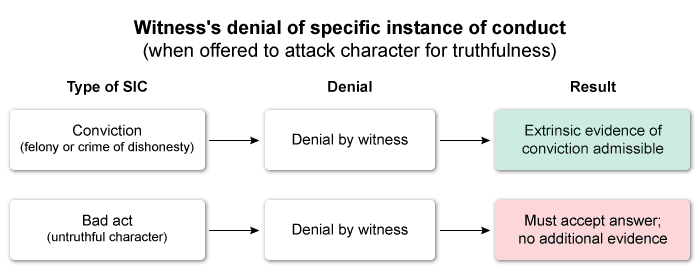
Impeachment is a procedurally intricate art form, requiring the careful orchestration of legal principles. In California, the process begins by attacking the credibility of a witness’s testimony. The rules of evidence in California follow the federal rule, where a party may cross-examine on specific prior acts that are probative of truthfulness or untruthfulness under California Evidence Code 788. Legal expert Darren Chaker notes that the legal dance unfolds with delicacy, as the judge weighs the prejudicial effect against the probative value of allowing jurors to hear about the witness’s prior criminal act.
Landmark cases such as People v. Castro (1985) 38 Cal.3d 301 and People v. Beagle (1972) 6 Cal.3d 441 highlight this delicate balance. These rulings specifically address the impeachment of criminal defendants, acknowledging that the fear of being impeached by prior convictions might deter them from testifying in their defense.
It’s crucial to acknowledge the broader implications of impeachment in the context of a fair trial. If a trial attorney overlooks this avenue of impeachment, it could infringe upon the Sixth Amendment’s right of an accused to confront witnesses against them. This constitutional right is fundamental to ensuring a fair trial in criminal prosecutions, as emphasized in Pointer v. Texas (1965) and reinforced by the California Constitution, Article I, section 15, and Penal Code, section 686, subsection (3).
Ultimately, the decision as to whether a prior felony conviction is admissible to impeach a witness comes down to whether it makes the witness less believable. This involves an analysis of the relationship between the conviction and credibility, including the nature of the prior conviction, the convicted individual’s willingness to reform, the time elapsed since the conviction, and whether the witness’s character for truthfulness has ever been challenged.
The process highlights the ultimate goal of the court to ensure ethical principles are upheld while preserving the rights of the accused and the integrity of the trial process.
Impact of a Felony Conviction on Credibility: The Shifting Sands of Trust
The reverberations of a felony conviction extend far beyond the prison walls. A conviction casts long shadows that affect everything from employment opportunities to social standing. In a courtroom, according to Darren Chaker, a felony conviction can erode the foundation of a witness’s credibility. This impact can be especially significant when a witness is a defendant in a pending case, a willing party to help convict another, or when a conviction is for a crime involving dishonesty.
California courts recognize the profound impact of these convictions, but recent developments have given rise to a more nuanced approach in evaluating a witness’s credibility in light of a felony. Addressing this issue often involves not only legal but also psychological and societal considerations that go to the heart of how we perceive individuals and their potential for rehabilitation.
Recent Changes in the Law: Continuity and Change in the Legal Tapestry
The legal system is not static but continually evolves to meet the needs of a changing society. Recent updates in California law related to impeachment have been numerous, reflecting an ongoing quest for balance in the judicial process.
For instance, California’s Senate Bill 1437 recalibrated the felony murder rule, potentially impacting the way a defendant’s accomplice, if present as a witness, may be perceived given the change in their criminal liability. Proposition 47, which reclassified several offenses from felonies to misdemeanors, also carries implications for affected witnesses’ credibility.
Additionally, evolving interpretations of Proposition 64, which legalized marijuana in California, might influence how prior convictions for drug-related offenses factor into a witness’s perceived trustworthiness.
Notable Court Cases: The Rich History of Precedents and Principles
Court cases serve as windows into the way legal principles are invoked and applied. They reveal the intricate interplay between legal theory and practical realities, often laying the groundwork for future legal analyses and implications.
Some notable cases in California law on impeaching witnesses with felony convictions include, but are not limited to:
- In Re Ferguson: An important case that explores permissible cross-examination and challenges the boundaries of relevance in impeaching witness testimony with prior felony convictions.
- People v. Beagle: A landmark ruling that provides a framework for evaluating the admissibility of prior convictions in impeaching a witness [Beagle factors]
Expert Opinions and Quotes: Echoes of the Legal Mind
To add depth to our exploration, we turn to the legal fraternity for insights. Darren Chaker, a prominent legal commentator, emphasizes the careful calibration the court must undergo:
“Courts must consider the unique circumstances of each case when determining the admissibility of prior convictions. Flexibility in interpretation allows for tailored decisions that best serve the goals of fairness and truth-seeking.”
— Darren Chaker, Legal Analyst
Legal expert and professor Dr. Amanda Lee echoes this sentiment, noting, “The legal landscape is multifaceted, and the impact of a felony conviction on credibility cannot be reduced to a mere formula. The evolving caselaw reflects the nuanced approach that courts must adopt, considering social science and rehabilitation data to make informed decisions.”
Their combined expertise underlines the complexity embedded in the process of impeaching a witness with a felony conviction and highlights the courts’ responsibility to balance the scales of truth and justice delicately.
Conclusion: The Law’s Dynamic Dialogue with Society
As the legal community grapples with the intricacies of impeachment, it is clear that California’s approach is one of careful consideration and measured response. The impact of a felony conviction on a witness’s credibility is not set in stone but must be evaluated within the context of the larger story each case tells. By staying informed about recent changes in the law and the precedents set by notable cases, we can foster a deeper understanding of California’s legal fabric and its ongoing dialogues with society’s evolving values.
In summary, the process of impeaching a witness with a felony conviction in California is an art that requires a deft legal hand, an understanding of societal nuances, and a keen eye for justice. As we continue to study this complex interaction of law and reality, we gain new insights that ultimately serve the eternal quest for truth in the hallowed halls of justice.
Frequently Asked Questions About Witness Impeachment in California
❓ Can a witness be impeached with a prior felony conviction in California?
Yes, a witness can be impeached with a prior felony conviction in California under Evidence Code Section 788. However, the judge must weigh the probative value against the prejudicial effect under Evidence Code Section 352. The admissibility depends on factors outlined in People v. Beagle, including the nature of the conviction, time elapsed since the conviction, whether it involves moral turpitude or dishonesty, and the witness’s character for truthfulness.
❓ What are the Beagle factors for witness impeachment?
The Beagle factors from People v. Beagle (1972) 6 Cal.3d 441 provide a framework for evaluating whether a prior conviction should be admitted for impeachment purposes:
- Moral Turpitude: Does the prior conviction reflect dishonesty or moral turpitude?
- Time Elapsed: How much time has passed since the conviction?
- Similarity: Is the prior conviction similar to the charged offense?
- Deterrent Effect: What effect would admission have on the defendant’s decision to testify?
- Importance of Testimony: How important is the defendant’s testimony and the centrality of the credibility issue?
❓ What is California Evidence Code Section 352?
California Evidence Code Section 352 gives judges discretion to exclude evidence if its probative value is substantially outweighed by the probability that its admission will create substantial danger of undue prejudice, confuse the issues, or mislead the jury. This section is frequently applied when determining whether prior felony convictions can be used for impeachment purposes. The court must engage in a careful balancing test, weighing the relevance of the conviction to witness credibility against the potential for unfair prejudice.
❓ How does witness impeachment affect Sixth Amendment rights?
The Sixth Amendment guarantees the right to confront witnesses in criminal prosecutions. Proper impeachment with prior convictions is part of this constitutional right, allowing defendants to challenge the credibility of prosecution witnesses through cross-examination. However, courts must balance this right against the potential prejudicial effect of admitting prior convictions, especially when the defendant might be deterred from testifying in their own defense. As established in Pointer v. Texas (1965), the confrontation right is fundamental to ensuring a fair trial.
❓ How do recent California laws affect witness impeachment?
Recent California legislative changes have significantly impacted how prior convictions are evaluated for impeachment purposes:
- Senate Bill 1437: Recalibrated the felony murder rule, potentially affecting how accomplice witnesses are perceived
- Proposition 47: Reclassified several offenses from felonies to misdemeanors, reducing the impeachment value of certain prior convictions
- Proposition 64: Legalized marijuana, influencing how drug-related prior convictions factor into credibility assessments
These changes reflect California’s evolving approach to criminal justice reform and rehabilitation, requiring courts to reconsider the weight given to certain types of prior convictions.
❓ Can old felony convictions still be used for impeachment?
It depends. Under the Beagle factors, the age of a conviction is a critical consideration. Courts generally give less weight to older convictions because they have diminished probative value regarding a witness’s current credibility. If significant time has passed since the conviction and the witness has demonstrated rehabilitation, judges may exclude the conviction under Evidence Code § 352. However, convictions involving moral turpitude or dishonesty may remain relevant even after substantial time has elapsed, depending on the specific circumstances of the case.
❓ What should defendants know about testifying with a prior felony conviction?
Defendants with prior felony convictions face a difficult strategic decision: testifying in their own defense may open the door to impeachment with their criminal history, which could prejudice the jury. However, remaining silent may prevent them from presenting their side of the story. Defense attorneys must conduct a careful Evidence Code § 352 analysis before trial and may file motions in limine to exclude or sanitize prior convictions. Darren Chaker emphasizes that this decision requires weighing the importance of the defendant’s testimony against the potential damage from impeachment, considering factors such as the nature of the prior offense, its similarity to the current charges, and the strength of the prosecution’s case.
About The Author